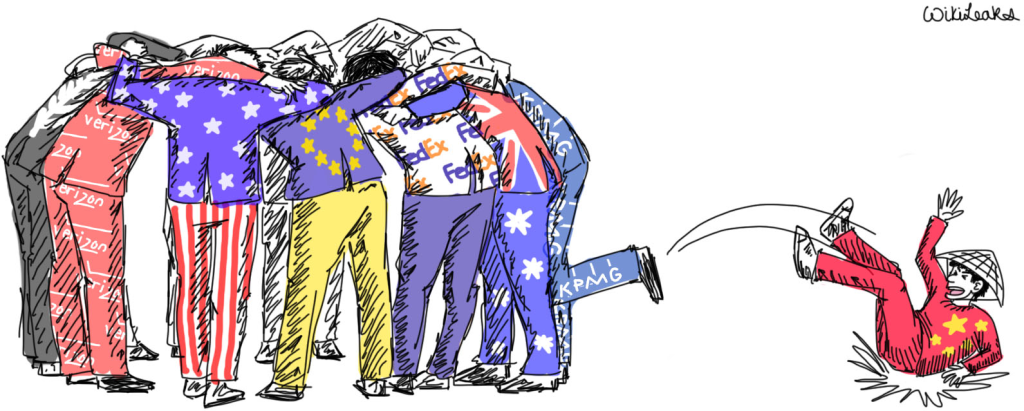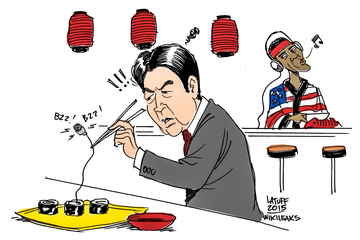
A collection of NSA documents showing its surveillance operations in France, Germany, Brazil, and Japan. Spying targets include heads of state, foreign ministries, and major companies.
Press Release
Top Japanese NSA Targets / Top Japanese NSA Intercepts
Today, Friday 31 July 2015, 9am CEST, WikiLeaks publishes “Target Tokyo”, 35 Top Secret NSA targets in Japan including the Japanese cabinet and Japanese companies such as Mitsubishi, together with intercepts relating to US-Japan relations, trade negotiations and sensitive climate change strategy.
The list indicates that NSA spying on Japanese conglomerates, government officials, ministries and senior advisers extends back at least as far as the first administration of Prime Minister Shinzo Abe, which lasted from September 2006 until September 2007. The telephone interception target list includes the switchboard for the Japanese Cabinet Office; the executive secretary to the Chief Cabinet Secretary Yoshihide Suga; a line described as “Government VIP Line”; numerous officials within the Japanese Central Bank, including Governor Haruhiko Kuroda; the home phone number of at least one Central Bank official; numerous numbers within the Japanese Finance Ministry; the Japanese Minister for Economy, Trade and Industry Yoichi Miyazawa; the Natural Gas Division of Mitsubishi; and the Petroleum Division of Mitsui.
Today’s publication also contains NSA reports from intercepts of senior Japanese government officials. Four of the reports are classified TOP SECRET. One of the reports is marked “REL TO USA, AUS, CAN, GBR, NZL”, meaning it has been formally authorised to be released to the United States’ “Five Eyes” intelligence partners: Australia, Canada, Great Britain and New Zealand.
The reports demonstrate the depth of US surveillance of the Japanese government, indicating that intelligence was gathered and processed from numerous Japanese government ministries and offices. The documents demonstrate intimate knowledge of internal Japanese deliberations on such issues as: agricultural imports and trade disputes; negotiating positions in the Doha Round of the World Trade Organization; Japanese technical development plans, climate change policy, nuclear and energy policy and carbon emissions schemes; correspondence with international bodies such as the International Energy Agency (IEA); strategy planning and draft talking points memoranda concerning the management of diplomatic relations with the United States and the European Union; and the content of a confidential Prime Ministerial briefing that took place at Shinzo Abe’s official residence.
Julian Assange, WikiLeaks Editor-in-Chief, said: “In these documents we see the Japanese government worrying in private about how much or how little to tell the United States, in order to prevent undermining of its climate change proposal or its diplomatic relationship. And yet we now know that the United States heard everything and read everything, and was passing around the deliberations of Japanese leadership to Australia, Canada, New Zealand and the UK. The lesson for Japan is this: do not expect a global surveillance superpower to act with honour or respect. There is only one rule: there are no rules.”
WikiLeaks Investigations Editor Sarah Harrison said: “Today’s publication shows us that the US government targeted sensitive Japanese industry and climate change policy. Would the effectiveness of Japan’s industry and climate change proposals be different today if its communications had been protected?”
Japan has been a close historical ally of the United States since the end of World War II. During a recent Presidential visit to Japan, US President Barack Obama described the East Asian country as “one of America’s closest allies in the world”. Today’s publication adds to previous WikiLeaks publications showing systematic mass spying conducted by US intelligence against the US-allied governments of Brazil “Bugging Brazil”, France “Espionnage Élysée” and Germany “The Euro Intercepts”; “All the Chancellor’s Men”.